

Listen now on Spotify or Apple Podcasts:
I don’t know if any of you are making changes to your diet in the new year, but if you are, today’s book might just make you feel a little better. After all, we live in a world obsessed with wellness rules, where every meal comes with almost moral weight. But what if the path to health isn’t about restriction—it’s about permission?
Ezekiel Emanuel is one of America’s leading physicians, as well as a bioethicist, health policy expert, and a vice provost and professor at the University of Pennsylvania. His new book is called Eat Your Ice Cream: Six Simple Rules for a Long and Healthy Life, and below he makes the case that enjoying life—cheesecake included—might be the healthiest choice of all.
Resolve to live better in 2026. Join our community of big thinkers and have the best nonfiction sent right to your door.

1. Don’t be a schmuck.
Contrary to our intuitions, a lot of wellness lies in what you don’t do. That is, avoiding things that are bad for your health and longevity. We lean toward adding things instead of subtracting them—additive bias. One of the best and easiest things you can do for your wellness is not take stupid risks. Of course, you know about smoking, but vaping is not safe either. It has existed for less than 20 years, and we have no idea about its long-term health impact. Then there is gun ownership. If you are not a hunter but keep a gun in your house to keep you safe, you are twice as likely to die by homicide relative to a neighbor who doesn’t have a gun.
One of the more schmucky moves in life is trying to climb Mount Everest. About one in a hundred climbers, including experts, die on the mountain. Among climbers over 59 years of age, the mortality rate shoots up to one in 25. I’m not a homebody, and I know there are risks to everything, and I take a lot of them. But a one in a hundred chance of dying just for some fleeting bragging right seems like a total schmuck move.
The only job I know of that has a higher risk of death than climbing Everest? Being president of the United States. 45 men have held that job. Four were killed in office. That’s a one in 11 chance of dying in office of the presidency. Even worse, many have faced assassination attempts. Think of Trump’s ear and Ronald Reagan’s intestines. Maybe it’s time to rethink your desire to become president.
Too often, people obsess over minute changes while ignoring the obvious high-impact choices that keep us alive. The time spent worrying about cold plunges or red-light regimens that might add seconds or minutes to your life would be better spent enriching your life in more valuable ways.
2. Talk to people.
It’s important to cultivate family, friends, and other social relationships for a long, healthy, and happy life. The people we interact with shape the quality and length of our lives. My parents lived by this truth. My father would strike up conversations with strangers, ask questions, listen, and genuinely care. My mother provided a safe harbor for anyone in need. They didn’t obsess about exercise, diet, or narcissistic mindfulness practices. They were about interacting with people.
Science now confirms what they instinctively knew. The Harvard Study of Adult Development followed 2000 individuals over about 85 years. Good relationships were the strongest single predictor of who was going to be happy and healthy as they grew old. Loneliness has real physiological effects. It is linked to changes in inflammation, immune system functioning, and other physiological mechanisms that in turn are associated with heart disease, stroke, and ultimately death.
Now, you might wonder if introverts who don’t want to socially interact will be happier and healthier if they don’t talk to people so often. Many studies, however, have shown that if you are among the 25 to 30 percent of people who are introverted, forcing yourself to act more extroverted at times will make you happier. For those who find this intimidating, my father had four rules about creating wellness-enhancing social relationships:
Conversations are good. Be an initiator.
Let curiosity drive the conversation.
Ask questions and follow-up questions. They affirm that you are listening and value the conversation.
You’re not so fragile. Being slighted or snubbed probably has nothing to do with you, but rather means the other person is having a hard time.
Modern life pushes us away from one another. Smartphones, social media, and COVID have reduced our number of meaningful interactions, leaving many people lonelier and sicker. In a 2025 Harvard Business Review article, the top use case of GenAI was for therapy and companionship. The solution is simple, but deliberate. Nurture friendships, engage with strangers, and you’ll be happier, healthier, and live longer.
There are two great things about these social relations. First, unlike exercise, there’s no strenuous exertion today for payback decades into the future. Good social relations are good for you now. Initiating conversations is also generous. It’s good for you, and it’s good for the people you talk to, so you can be virtuous just by starting a conversation.
3. Expand your mind and stay mentally sharp.
Staying mentally sharp through continuous learning, curiosity, and mental engagement keeps your brain healthy by delaying cognitive decline. The model for staying mentally sharp and engaged, no matter your age, is Benjamin Franklin. At 70, he crossed the Atlantic for the seventh time to serve as America’s first ambassador to France, securing critical military and financial support that helped the United States win the Revolutionary War. Simultaneously, he mapped the Gulf Stream, improving shipping efficiency, and when he was in France, he invented bifocals and a new anchor, all before returning home on his eighth transatlantic voyage at the age of 79.
Two factors affect your mental functioning as your cognitive functioning declines with aging. The first is cognitive reserve, which is how much mental functioning you begin with before the cognitive decline happens. The second factor is the rate of cognitive decline.
You need to target both. Build a larger cognitive reserve through more education, challenging hobbies, and engaging with other people. Slowing the rate of cognitive decline happens by avoiding repetitive and passive activities like watching TV or doomscrolling.
A fun and approachable strategy for avoiding cognitive decline is trying new recipes in the kitchen. This is a wellness trifecta. It requires complex mental tasks as you plan the recipe, physical tasks as you go about the kitchen to organize the food, and then, if you invite friends over and have a meal together, it promotes social relationships.
This week, Book of the Day is brought to you by How To Know Your Self: The Art & Science of Discovering Who You Really Are, by J. Eric Oliver — a transformative new understanding of what it means to be a person―what it means to have and be a “self”. Pick up your copy today.

4. Move it.
Exercise well and regularly. There are three different kinds of exercise:
Aerobic exercise that’s good for your heart and lungs.
Strength training that’s good for your muscles and flexibility.
Balance training.
These improve energy, prevent disease, postpone cognitive decline, and support overall well-being. Taking a ride in a golf cart, however, is not exercise. In its modern form, golf is a game, not a physical activity. Golf might be useful for social engagement, but golfers who drive carts get zero exercise. And even if you carry the bag of golf clubs around for all 18 holes, it’s only moderate exercise for three or four hours of input.
A second secret about exercise is that there’s a plateau effect on the amount of benefit you get from ever more exercise. Spending hours a day on vigorous exercise is not going to add more months or years to your life. After about two and a half or five hours per week of vigorous exercise, you won’t get any increase in longevity. The time you spend overexercising is time you could devote to more meaningful activities, like volunteering in your community or talking with your best friend as you walk through a forest.
5. Eat your ice cream.
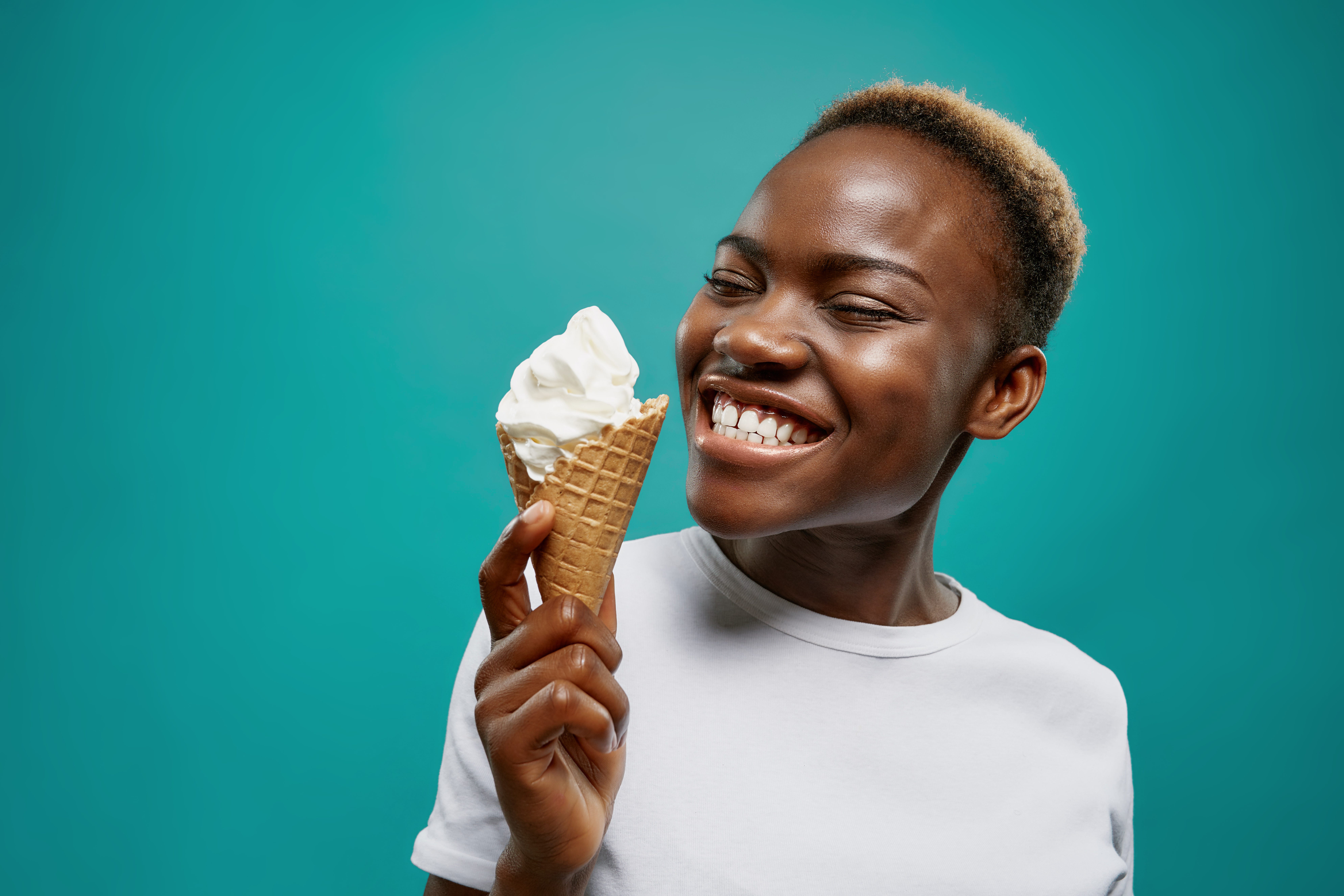
I love baking, and one of my favorite dishes to make is my mother’s cheesecake. With three packages of full-fat cream cheese and plenty of butter in the crust, it’s not part of any wellness diet. If I ate it every week, it would become a problem, but indulging from time to time is not against the doctor’s orders. A balanced diet matters, but it doesn’t require constant self-denial and deprivation. Here are three basic eating behaviors that are good for you.
Let’s begin with stopping the bad stuff. Stop drinking sodas and other sugary drinks. These are literally empty calories. Sodas have about 140 calories, which is about 10 teaspoons of added sugar. And diet sodas are no better. They keep us wanting sweet things, and the artificial sweeteners are terrible for us. They probably reduce the diversity of bugs in our microbiome, which is not good for our health.
Similarly, cut down on salty snacks, packaged cakes, and cookies. Over the last 30 years, they have become almost 25 percent of the daily calories that we consume. Put away the muffin and high-calorie coffee and reach instead for a wholesome breakfast.
Once you do these two things, make a special place for fermented foods like yogurt, kimchi, cottage cheese, miso, and sourdough bread. They have outsized health benefits, especially through enhancing your microbiome.
Those are the three essentials. There is plenty more you can do, such as eat more fiber from fruits and vegetables. Only 7 percent of the U.S. population gets the recommended dose of fiber, which builds the microbiome, moderates blood sugar, and makes you feel full. So, eat more raspberries, blackberries, apples, Brussels sprouts, carrots, chickpeas, almonds, and oats, and leave the supplements on the shelves. Eating whole foods rich in fiber is much cheaper, tastier, and healthier than buying expensive prebiotic supplements.
6. Sleep like a baby.
We think sleep is optional. Type A’s think it’s a waste of eight hours. That’s a schmucky view. A study at the Beth Israel Hospital in Boston found that people with bad sleep were more than twice as likely to suffer from obesity, diabetes, and heart disease. Self-reported sleep of less than five hours was associated with a 25 percent higher risk of mortality.
Sleep is a product of evolution, and it hasn’t survived these tens of thousands of years among humans for no reason. Sleep is critically important for good brain functioning. It helps us consolidate memories. It allows us to remove toxins and other problems in the brain. But sleep isn’t like any other wellness behavior. You can’t easily force yourself to go to sleep. Unfortunately, in looking for a quick fix, people tend to reach for a bottle of sleeping pills.
Those don’t work. Both over-the-counter and prescription sleeping pills are ineffective at best and harmful at worst. The American Academy of Sleep Medicine and the Cleveland Clinic both recommend that you avoid sleeping pills. Make your bedroom conducive to sleep. Keep it dark. Don’t drink caffeine or alcohol during the seven hours before sleep. That means if you sleep at 10:00 PM, skip the dinner wine.
Wellness is important, but it’s not the end goal of life. It is a way for you to live the kind of life that you want to live. Wellness shouldn’t be difficult. It’s not about self-denial, being perfect, or trying some crazy biohack. Don’t waste valuable time chasing the latest fad just to add time later when, by the nature of aging, you won’t be in optimal health anyway. Remind yourself what makes life meaningful and joyful, and try to make the world around you a better place. That will help you live well, better than any of those thousands of food or exercise fads or hacks.