
The Superpower You Didn’t Know You Had
And other big ideas we came across this week.


You’ve probably already heard—many times over—how important good relationships are to your happiness and mental health. So rather than restating the obvious, let’s ask a better question: what actually makes a relationship good? Why do some conversations flow while others stall? Why do some interactions feel easy and energizing, while others leave us feeling unseen or drained? This week, we explored the science behind real connection and learned tools for building relationships that don’t just exist, but actually matter.
Resolve to live better in 2026. Join our community of big thinkers and have the best nonfiction sent right to your door.
This Week on the Next Big Idea Podcast

The superpower you didn’t know you had.
You know that feeling when you meet someone and something just … clicks? Scientists have a name for it. They call it “interpersonal synchrony.” Turns out we subconsciously mimic other people’s movements, postures, facial expressions, and gestures. We even sync involuntary functions like heart rate, blood pressure, brain waves, pupil dilation, and hormonal activity. Kate Murphy, author of the forthcoming book Why We Click, says interpersonal synchrony — syncing for short — is our superpower. But there’s a catch. The same instinct that bonds us can also hijack us.
Listen to our conversation with Kate on Spotify or Apple Podcasts.
Book Bite of the Week


What make you feel like you count?
People don’t just want to belong—they want to know they matter. Feeling valued and needed is a basic human need, and it’s something we can create, lose, and rebuild through small, everyday choices in our relationships, work, and communities.
Jennifer Breheny Wallace is a journalist who began her career at CBS’s 60 Minutes and is now a contributor to The Wall Street Journal and The Washington Post. Her New York Times bestselling book Never Enough was named an Amazon Best Book of the Year, and her new book is Mattering: The Secret to a Life of Deep Connection and Purpose. Check out her summary on the Next Big Idea app.
This Week on the Next Big Idea Daily Podcast
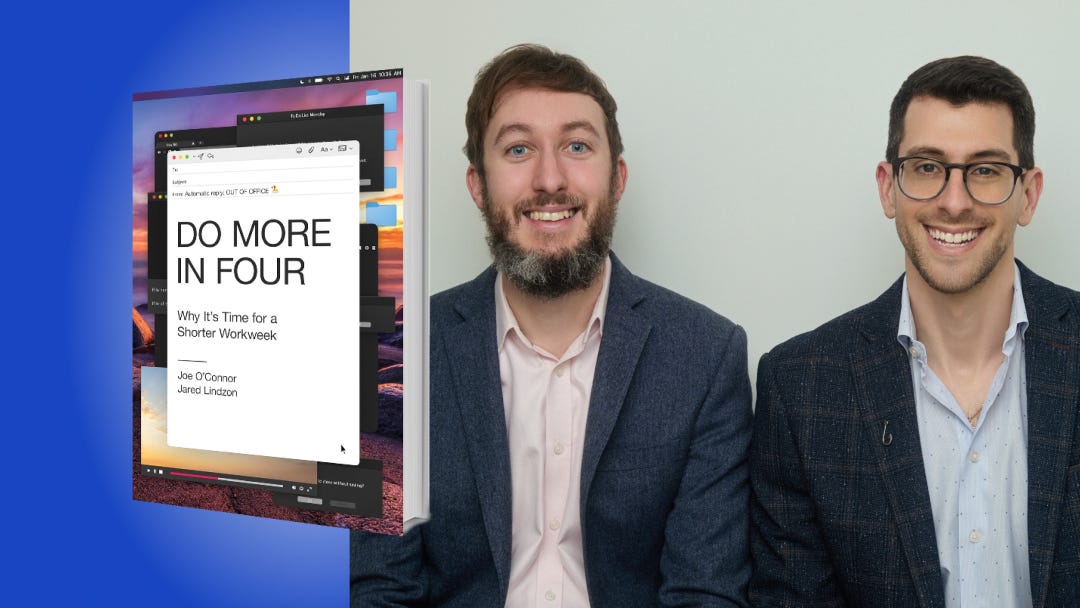
Why do most of us work five days a week?
Chances are, you work five days a week: Monday through Friday. And you probably don’t think much about it—because that’s just how work works, right? But who decided that five days was the right number in the first place? As it turns out, the modern workweek wasn’t thoughtfully designed for focus, creativity, or even productivity. It was inherited from the Industrial Age, built for factory floors and time clocks, not knowledge workers and digital tools. So maybe it’s time for a rethink. In Do More in Four: Why It’s Time for a Shorter Workweek, researcher and work redesign strategist Joe O'Connor and journalist Jared Lindzon make the case that working less can actually help us do better work. Check out their key insights on Spotify or Apple Podcasts.